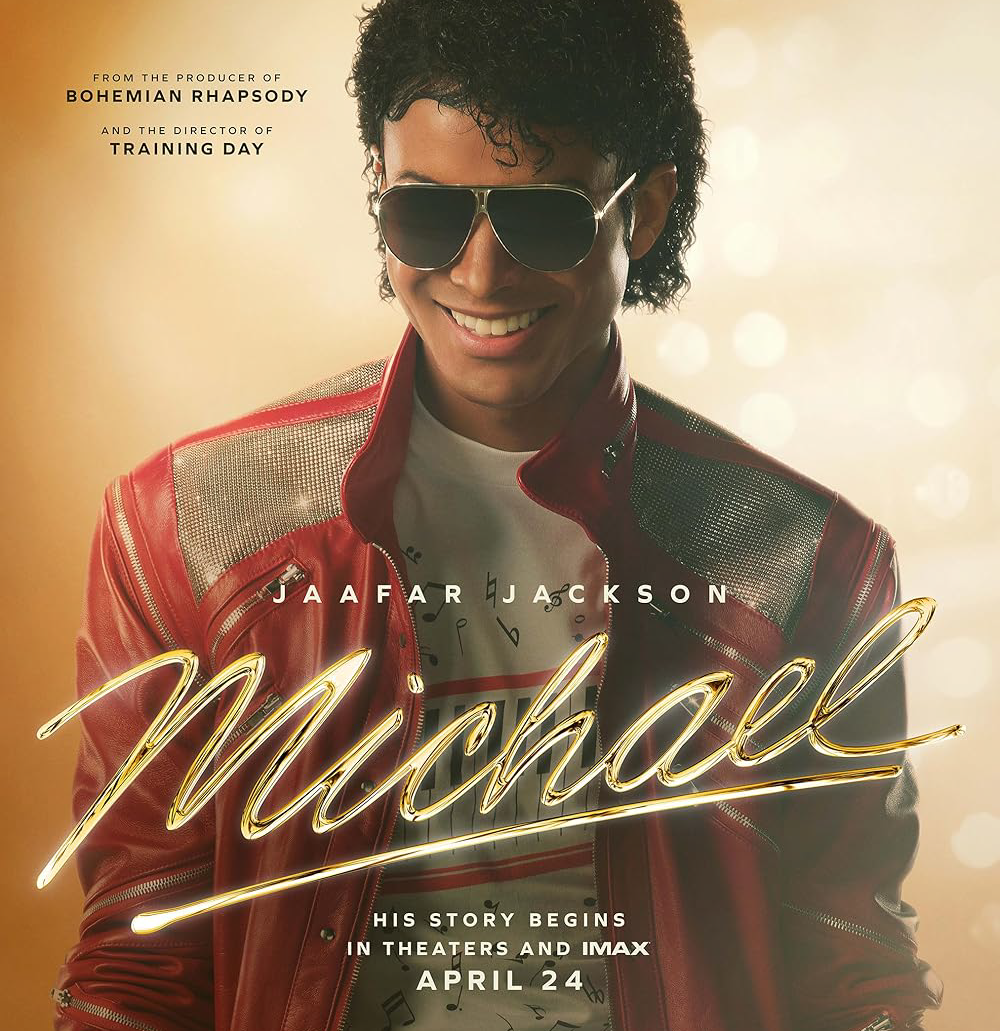
Michael (2026)
Antoine Fuqua’s Michael is a curious specimen: reverential without quite becoming devotional, polished without ever risking revelation, and emotionally calculated in the way that prestige biopics often are when they arrive pre-approved by estates, lawyers, and the machinery of posthumous canonization. The film moves with the solemn inevitability of a story whose ending is already tattooed onto global consciousness. One does not enter the theatre wondering what shall happen to Michael Jackson, only how delicately the filmmakers will choreograph the route toward tragedy. In that sense, John Logan’s screenplay resembles less a drama than a guided museum tour through inherited mythology -- carefully lit, occasionally moving, but seldom daring enough to unsettle its own exhibits.
Still, one must concede that Jaafar Jackson carries the impossible burden of embodiment with astonishing discipline. Nepotism is usually the enemy of dramatic credibility, yet here it paradoxically becomes an asset. He does not impersonate Michael so much as absorb him: the fragile cadence, the hyper-alert physicality, the perpetual sense that the performer is simultaneously desperate for adoration and terrified by it. What rescues the performance from caricature is restraint. Rather than reducing Jackson to tics and moonwalks, Jaafar allows glimpses of the exhausted machinery beneath the spectacle.
Colman Domingo, meanwhile, delivers the film’s sharpest and most morally coherent performance. His Joe Jackson is not rendered as a cartoon tyrant but as something more chilling: a man who confuses domination with duty. Domingo wisely refuses melodrama. He speaks with the cold confidence of someone who believes history itself will vindicate cruelty if the children become famous enough. In lesser hands the character would have dissolved into cliché; Domingo instead makes him frighteningly plausible.
There is also fine work from Nia Long, whose performance operates almost entirely through emotional subtraction. She becomes the silent geometry holding together a collapsing household, communicating maternal exhaustion with glances that say more than the screenplay ever permits her to articulate aloud. Likewise, Miles Teller avoids turning the attorney into a mere exposition machine. Teller gives Branca the oily charm of a man who recognizes both the commercial miracle and catastrophic instability of the artist he represents.
Visually, the picture is often magnificent. Fuqua and cinematographer Dion Beebe construct a world of gleaming surfaces and oppressive grandeur that captures the peculiar loneliness of celebrity better than the script itself manages. The concert recreations pulse with engineered ecstasy, while the domestic interiors possess a claustrophobic severity that quietly echoes the emotional architecture of Michael’s upbringing. Neverland, predictably, is photographed with a dreamlike softness bordering on fantasy, but even here the production design exhibits meticulous care. The film understands the visual language of mythmaking, and it deploys it with considerable technical sophistication.
Yet the film’s greatest weakness lies precisely where one expected courage. The narrative tiptoes around controversy with the cautious gait of corporate diplomacy. One senses entire rooms of attorneys hovering just outside the frame. The result is a work that often feels less interested in interrogating Michael Jackson than in preserving him within amber. It is not dishonest exactly, but it is conspicuously selective. One leaves admiring the craftsmanship while suspecting that the human being at the center has been curated into near-abstraction.
And still, perhaps inevitably, the film revives the old and uncomfortable question: whether artistic greatness can or should be disentangled from personal conduct. Michael Jackson remains one of the most transformative entertainers of the modern age, and the film is persuasive in demonstrating the scale of that talent. But it is equally impossible to ignore the troubling allegations and profoundly unsettling relationship he appeared to cultivate with children. The mature viewer must resist both hysterical sanctification and simplistic cancellation. Art is not absolution, nor does moral ambiguity erase artistic achievement. The proper response is neither blind worship nor philistine denial, but the difficult adult task of holding two incompatible truths in one’s mind at the same time.
Ciao. For Now.
-Ash
